
Speakers are the final output point of any audio system and determine how accurately sound is reproduced in a listening environment. Speaker selection depends on technical compatibility, room conditions, intended usage, and long-term system planning. Understanding these factors ensures that a speaker system delivers consistent sound quality across music, movies, gaming, and other media.
A speaker is an electroacoustic transducer that converts electrical audio signals into audible sound waves. The conversion process occurs when an electrical signal from an amplifier moves a voice coil within a magnetic field, causing a speaker driver to vibrate and displace air.
A speaker system consists of multiple components working together to reproduce the full audible frequency range, typically from 20 Hz to 20 kHz. These components include drivers such as woofers, midrange drivers, and tweeters, each responsible for a specific frequency band. A crossover network divides the incoming signal so each driver reproduces only the frequencies it is designed to handle.
Speaker systems can o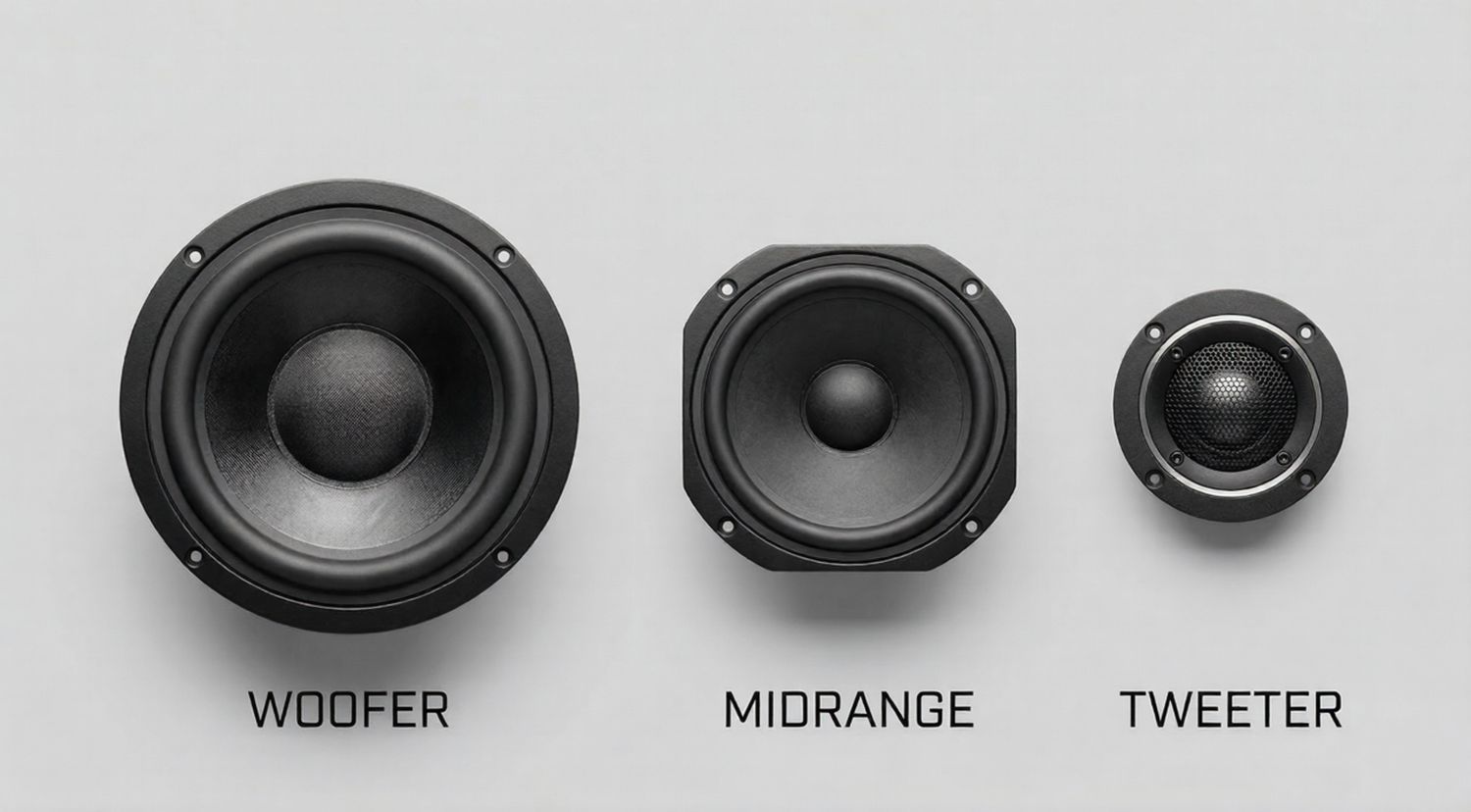 perate as standalone units or as part of a larger audio chain that includes a source device, amplifier or receiver, and signal processing components. System performance depends on electrical matching, acoustic placement, and environmental interaction.
Defining speaker buying priorities establishes a clear decision framework and prevents mismatched components. Priority definition involves budget allocation, usage intent, and physical listening conditions.
Speaker budget determines material quality, driver design, cabinet construction, and engineering tolerances. Entry-level speakers prioritize affordability, while higher price tiers introduce improved frequency linearity, lower distortion, and more durable enclosures.
Long-term upgrade planning involves selecting speakers that remain compatible with future amplifiers, receivers, or expanded channel layouts. Speakers with standard impedance ratings and moderate sensitivity provide greater system flexibility and reduce replacement frequency.
Primary use cases influence speaker voicing and system configuration. Music-focused systems emphasize tonal balance, stereo imaging, and midrange clarity. Movie-focused systems prioritize dialogue intelligibility, dynamic range, and surround envelopment. Gaming setups emphasize positional accuracy and nearfield detail.
Mixed-media systems require balanced performance across frequency response, transient accuracy, and spatial reproduction. Speaker selection should align with the dominant listening activity to avoid performance compromises.
Listening distance affects speaker size requirements, output capability, and dispersion characteristics. Nearfield listening environments require controlled directivity and low listening fatigue. Midfield and far-field setups require higher output capacity and broader sound dispersion.
Seating position consistency also affects speaker choice. Systems designed for a single listening position prioritize imaging precision, while multi-seat environments require even sound coverage across a wider area.
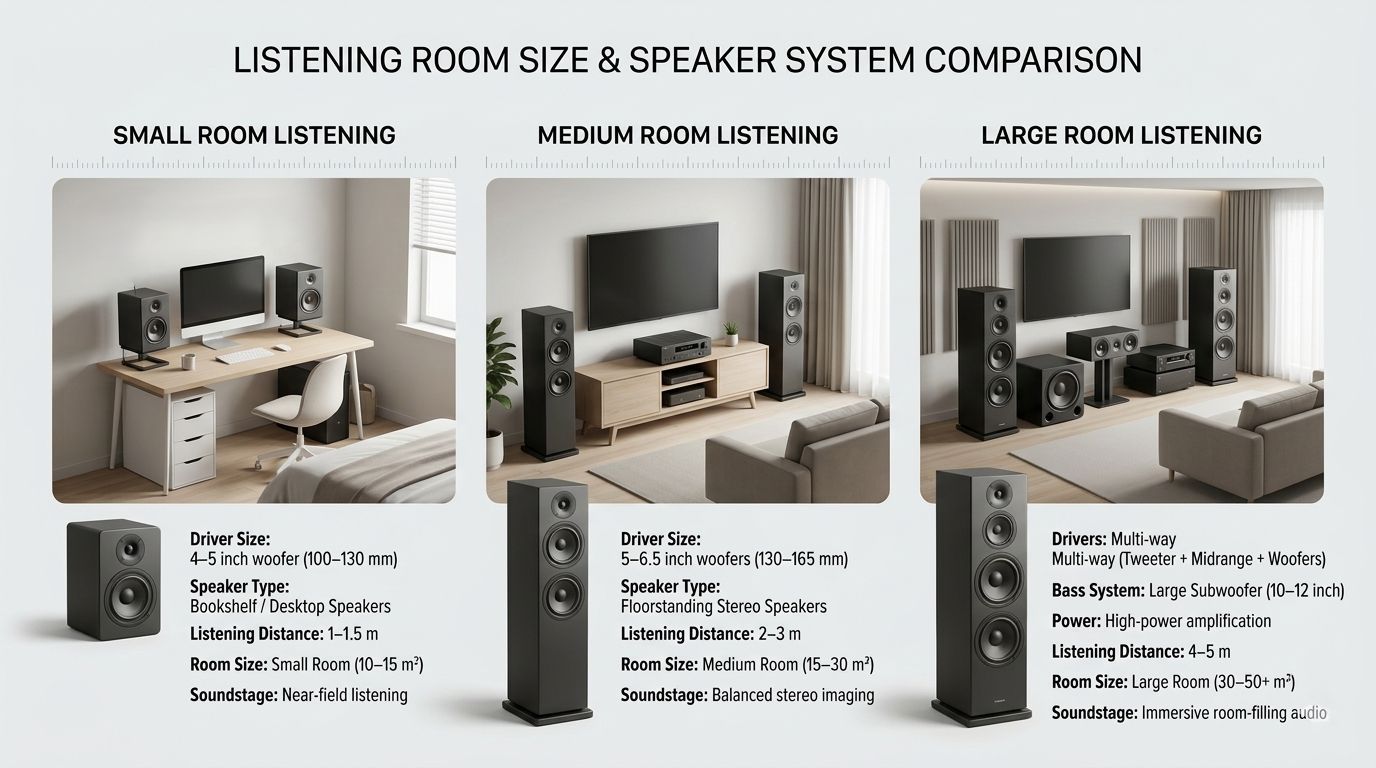
Room acoustics significantly influence perceived sound quality. Sound waves interact with room boundaries, surfaces, and objects, altering frequency balance and spatial characteristics.
Small rooms emphasize bass buildup and early reflections, requiring speakers with controlled low-frequency output. Medium rooms provide balanced acoustic behavior and allow greater flexibility in speaker size. Large rooms require speakers with higher sensitivity and greater output capability to maintain consistent sound pressure levels.
Room volume directly affects how efficiently sound energy disperses and decays, making room size a primary determinant of speaker suitability.
Ceiling height influences vertical reflections and perceived soundstage height. Low ceilings increase reflection density, while higher ceilings allow greater sound diffusion. Wall materials such as drywall, concrete, or glass affect sound absorption and reflection strength.
Hard, reflective surfaces increase brightness and reverberation, while softer materials reduce echo and high-frequency harshness. Speaker selection should account for these acoustic properties to maintain tonal balance.
Furniture placement alters sound paths and absorption patterns. Large objects positioned between speakers and the listening area obstruct direct sound and degrade clarity. Soft furnishings absorb midrange and high frequencies, while irregular surfaces scatter reflections.
Speaker placement must account for these obstructions to preserve imaging accuracy and frequency consistency.
Speaker systems must align with the intended entertainment configuration to ensure functional compatibility and optimal sound reproduction.
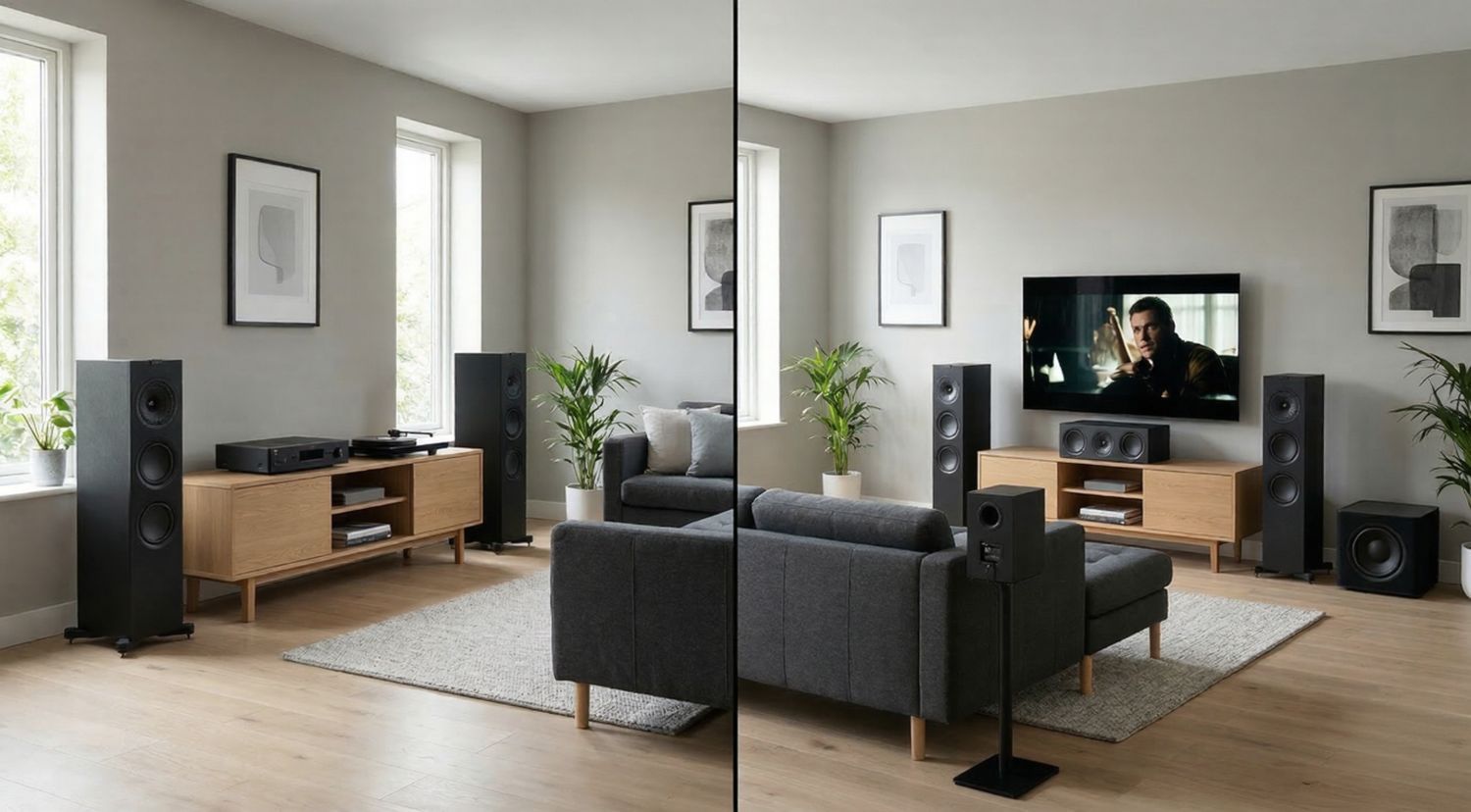
Stereo systems use two speakers positioned symmetrically to create a soundstage. Speaker matching focuses on frequency linearity, phase coherence, and imaging precision. Floorstanding or bookshelf speakers are commonly used, depending on room size and listening distance.
Stereo systems emphasize accurate left-right separation and tonal neutrality.
Home theater systems use multiple speakers arranged around the listening area to create immersive sound fields. Typical configurations include front left, center, right, surround channels, and subwoofers.
Speaker matching ensures consistent tonal characteristics across channels. Center speakers prioritize dialogue clarity, while surround speakers focus on ambient sound reproduction.
Nearfield setups position speakers close to the listener, reducing room influence. These systems require compact speakers with controlled dispersion and precise imaging.
Gaming setups prioritize positional audio accuracy and fast transient response, ensuring directional cues remain distinct during gameplay.
Speaker types differ in size, driver configuration, and intended application. Selecting the correct type ensures appropriate sound coverage and frequency response.
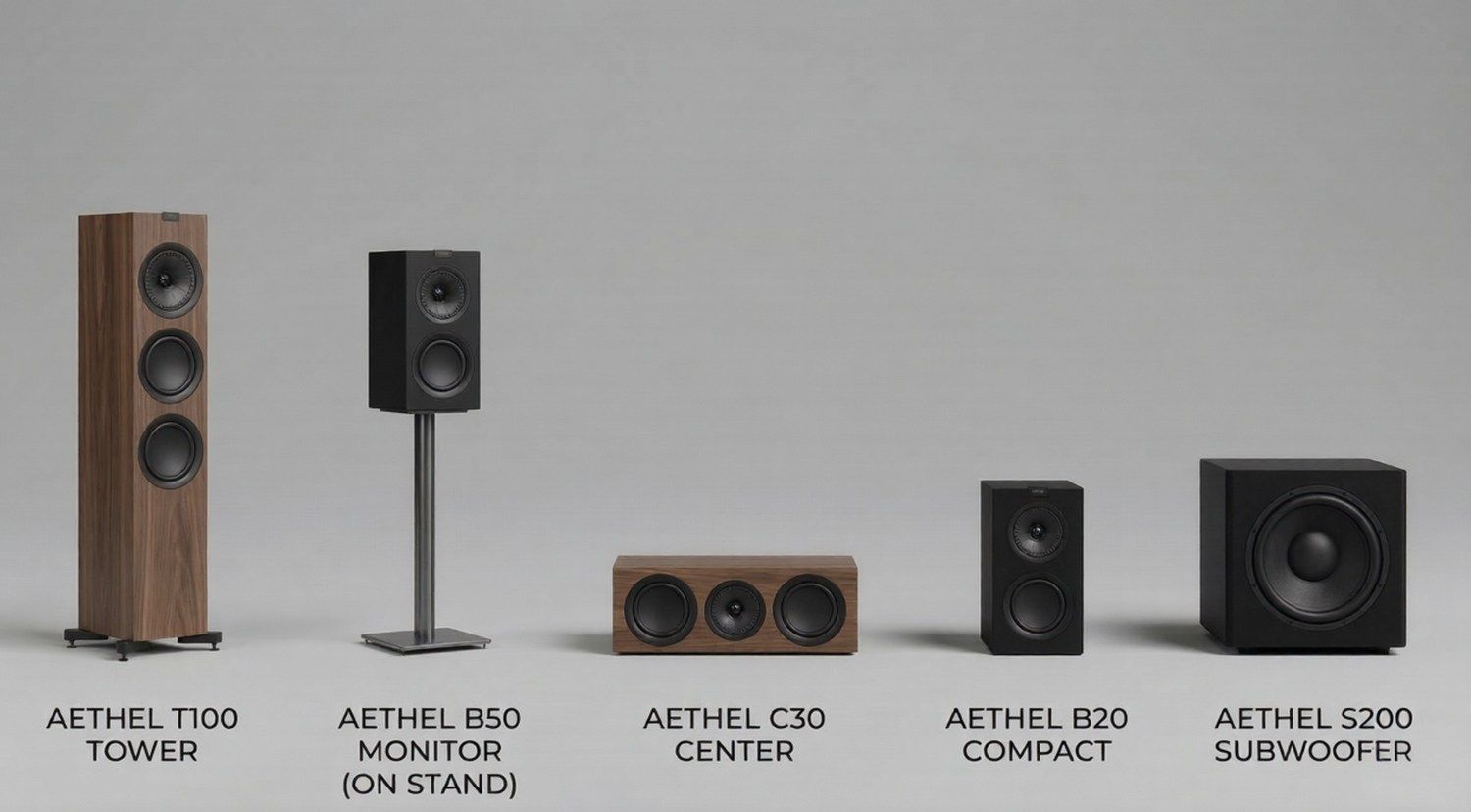
Floorstanding speakers integrate multiple drivers within tall enclosures, allowing extended bass response and higher output capability. These speakers fill larger rooms efficiently and reduce the need for separate subwoofers.
Cabinet volume supports deeper low-frequency reproduction and improved dynamic range.
Bookshelf speakers offer compact dimensions and flexible placement. These speakers focus on midrange clarity and accurate imaging, making them suitable for small to medium rooms.
Bass extension is limited by enclosure size, often requiring a subwoofer for full-range performance.
Center channel speakers reproduce spoken dialogue and on-screen audio cues. Horizontal driver layouts improve voice localization and ensure consistent dialogue across seating positions.
Clear midrange reproduction is the primary design goal.
Surround speakers reproduce ambient and directional effects. These speakers emphasize dispersion and spatial consistency rather than direct output.
Placement flexibility and tonal matching with front speakers are critical for seamless surround sound integration.
Subwoofers reproduce low-frequency effects below approximately 80 Hz. Dedicated amplification and large drivers enable high-output bass reproduction without overloading main speakers.
Subwoofer placement and calibration directly affect bass uniformity and impact.
Dolby Atmos speakers add a vertical sound dimension by reproducing overhead effects. These speakers can be ceiling-mounted or upward-firing designs that reflect sound off the ceiling.
Height channels enhance spatial realism and three-dimensional sound reproduction.
Speaker systems differ in amplification requirements and signal routing. Understanding these differences ensures system compatibility.
Passive speakers require an external amplifier or receiver to supply power. These speakers offer system flexibility and component-level customization.
Amplifier matching affects output capability, distortion levels, and overall system performance.
Active speakers integrate amplifiers directly into the speaker enclosure. Internal amplification is matched to driver specifications, improving efficiency and reducing signal loss.
Active designs simplify system configuration and reduce external equipment requirements.
Powered speakers include amplification and basic input controls. These speakers connect directly to audio sources and require minimal setup.
Powered systems prioritize convenience and compact design, making them suitable for desktop and casual listening environments.
Wireless speaker technologies differ in signal transmission method, bandwidth availability, and system scalability. Each wireless approach introduces specific tradeoffs related to portability, sound quality, latency, and network dependence.
Bluetooth speakers transmit audio using short-range wireless protocols designed for low power consumption. These speakers prioritize portability and ease of pairing over maximum audio fidelity. Bluetooth codecs compress audio data to maintain stable connections, which limits resolution compared to wired systems.
Battery-powered operation allows Bluetooth speakers to function independently of fixed power sources. Compact driver configurations and sealed enclosures support durability but restrict low-frequency extension. Bluetooth speakers are most effective in personal listening scenarios and temporary setups.
Wi-Fi speakers transmit audio over local networks, allowing higher data throughput and reduced compression. Network-based transmission enables synchronization across multiple speakers, supporting whole-home audio systems.
Wi-Fi speakers integrate with streaming services and smart home platforms, enabling centralized control and room-based grouping. These systems require stable network infrastructure and continuous power availability, making them suitable for permanent installations rather than mobile use.
Wireless transmission introduces latency due to encoding, buffering, and decoding processes. Bluetooth connections exhibit higher latency compared to Wi-Fi systems, which affects real-time applications such as video playback and gaming.
Compression reduces file size but removes audio data, affecting dynamic range and detail. Wi-Fi systems preserve more information due to higher bandwidth, resulting in improved clarity and stereo imaging under stable network conditions.
Portable and specialty speakers address specific environmental and installation requirements. These speakers emphasize durability, placement flexibility, or concealment depending on their intended function.
Portable speakers are designed for mobility and independent operation. Integrated batteries, compact enclosures, and reinforced materials support frequent transport. Sound output is optimized for short listening distances and moderate volume levels.
These speakers favor balanced midrange performance and controlled bass to prevent distortion when operating at higher volumes in open environments.
Outdoor speakers are engineered to withstand environmental exposure. Weather-resistant enclosures protect internal components from moisture, dust, and temperature fluctuations. UV-resistant finishes prevent material degradation over time.
Sound dispersion patterns are designed to cover wide areas while maintaining intelligibility in open-air environments. Outdoor speakers require secure mounting and weather-rated wiring for long-term reliability.
Architectural speakers integrate directly into walls or ceilings to minimize visual impact. These speakers rely on surrounding cavity volume for acoustic loading, which influences bass response and tonal balance.
In-wall and in-ceiling speakers are commonly used in distributed audio systems. Installation requires precise placement and structural compatibility to ensure consistent sound coverage and vibration control.
Soundbars and all-in-one systems consolidate multiple speaker drivers into a single enclosure. These designs prioritize simplicity and space efficiency while delivering improved audio compared to built-in television speakers.
Soundbars use digital signal processing to simulate surround sound from a single horizontal enclosure. Multiple drivers and angled dispersion create a wider soundstage without requiring separate speakers.
Traditional speaker systems use discrete channels positioned around the listening area. These systems provide more accurate spatial separation and dynamic range but require additional components and installation effort.
Sound bases function as platforms that support televisions while housing internal speakers. These systems enhance low-frequency response through larger internal cavities compared to slim soundbars.
Sound bases simplify placement and wiring while improving dialogue clarity and overall volume output relative to integrated television speakers.
Packaged home theater systems include matched speakers and amplification components designed to work together. These systems reduce compatibility concerns and simplify setup procedures.
Performance is optimized for balanced output rather than component-level customization. Packaged systems serve as entry points into multi-channel audio without complex configuration requirements.
Speaker specifications describe electrical and acoustic behavior. Understanding these parameters allows accurate system matching and realistic performance expectations.
Frequency response indicates the range of sound frequencies a speaker can reproduce. Human hearing typically spans from 20 Hz to 20 kHz. Speakers with a wider frequency response reproduce deeper bass and higher treble frequencies.
Response smoothness is as important as range. Irregular frequency response introduces tonal coloration and listening fatigue.
Sensitivity measures how efficiently a speaker converts electrical power into sound pressure level. Higher sensitivity speakers produce greater volume with less power.
Sensitivity affects amplifier requirements and maximum achievable loudness. Efficient speakers are suitable for lower-powered amplifiers and larger rooms.
Impedance represents the electrical load a speaker presents to an amplifier. Common impedance ratings include 4 ohms, 6 ohms, and 8 ohms.
Lower impedance draws more current from an amplifier, increasing output demands. Amplifier stability must match speaker impedance to prevent overheating or distortion.
Power handling specifies the amount of electrical power a speaker can safely handle. Continuous power ratings indicate sustained capability, while peak ratings represent short-term limits.
Adequate power handling ensures clean reproduction during dynamic audio passages without mechanical stress or thermal damage.
Proper matching between speakers and amplification ensures system reliability and sound accuracy. Electrical compatibility and power capacity determine overall performance.
AV receivers combine amplification, signal processing, and input management. These devices power multiple channels simultaneously and decode surround sound formats.
Receiver selection depends on channel count, supported audio formats, and power output per channel. Matching receiver capability with speaker sensitivity prevents distortion during high-volume playback.
Stereo amplifiers focus on two-channel performance and signal purity. These amplifiers prioritize low noise levels, stable current delivery, and precise volume control.
Stereo amplification is commonly used in music-centric systems where tonal accuracy and imaging precision are prioritized.
Power output determines how loudly speakers can play without distortion. Channel count defines how many speakers can be driven simultaneously.
Load matching ensures that amplifier output characteristics align with speaker impedance and sensitivity. Proper matching preserves sound quality and protects system components from electrical stress.
Speaker placement directly affects frequency balance, stereo imaging, and soundstage accuracy. Even high-quality speakers perform poorly when positioned incorrectly. Placement determines how sound waves interact with room boundaries and the listening position.
Stereo speakers perform best when positioned symmetrically relative to the listening position. Equal distance between speakers and listener supports accurate left-right imaging. Speaker height should align tweeters with ear level to preserve high-frequency clarity.
Toe-in refers to angling speakers toward the listening position. Moderate toe-in improves center imaging and reduces sidewall reflections. Excessive toe-in narrows the soundstage, while insufficient toe-in reduces focus and vocal localization.
Surround speakers are positioned to the sides or rear of the listening area to reproduce ambient and directional effects. Placement height is typically above ear level to diffuse sound rather than draw attention to speaker's location.
Distance consistency between surround channels improves spatial coherence. Proper alignment ensures smooth transitions between front and rear sound fields during multi-channel playback.
Subwoofer placement determines bass uniformity and impact. Low frequencies interact strongly with room dimensions, creating peaks and nulls. Corner placement increases output but may exaggerate certain frequencies.
Positioning the subwoofer along walls or near the listening position can improve bass balance. Placement testing and calibration are essential to achieve a consistent low-frequency response across the listening area.
Speaker evaluation identifies tonal characteristics, dynamic capability, and overall compatibility with listening preferences. Objective listening conditions provide reliable performance comparisons.
Using familiar audio material allows an accurate assessment of tonal balance and detail reproduction. Known recordings highlight deviations in bass control, midrange clarity, and treble smoothness.
Listening across multiple genres reveals how speakers handle varying dynamic demands and frequency ranges.
Speakers should maintain clarity at low and moderate volume levels. Increasing volume tests dynamic headroom and distortion resistance. Audible strain or harshness indicates driver or amplification limitations.
Consistent tonal balance across volume levels reflects controlled driver behavior and effective crossover design.
Controlled listening environments reduce external variables such as room acoustics and placement differences. Level-matched comparisons prevent loudness bias and ensure fair evaluation.
Switching between speakers using identical source material highlights differences in imaging, resolution, and transient response.
Speaker design extends beyond sound reproduction. Construction quality influences durability, resonance control, and long-term performance consistency.
Speaker cabinets support drivers and control unwanted vibrations. Rigid enclosures reduce resonance and prevent energy loss. Internal bracing and damping materials improve structural stability.
Well-designed cabinets preserve clarity by preventing sound coloration caused by panel vibration.
Finish options include wood veneers, painted surfaces, and textured coatings. Visual compatibility with room décor influences placement flexibility and long-term satisfaction.
Neutral finishes blend into environments, while distinctive designs become focal points within listening spaces.
Durable materials protect internal components from mechanical stress and environmental exposure. High-quality binding posts, driver surrounds, and cabinet joints extend operational lifespan.
Reliable construction ensures consistent performance over years of use without degradation.
Accessories influence stability, signal integrity, and placement precision. Proper support components enhance speaker performance without altering core design.
The speaker stands in a position where the speakers are at an optimal height, reducing surface interaction. Spikes and isolation pads decouple speakers from floors, minimizing vibration transfer.
Improved isolation enhances bass definition and imaging stability.
Speaker cables transmit amplified signals between components. Adequate conductor gauge ensures minimal resistance and stable current delivery.
Secure connection types, such as binding posts or banana plugs, maintain consistent electrical contact and reduce signal loss.
Wall mounts and ceiling brackets support precise speaker positioning in space-constrained environments. Secure mounting prevents movement and preserves alignment.
Proper installation maintains safety and consistent acoustic performance.
Initial setup and calibration maximize speaker performance within a specific environment. Optimization ensures accurate sound reproduction and balanced output.
New speakers may require a break-in period during which mechanical components reach optimal flexibility. Moderate playback levels support gradual stabilization.
Calibration adjusts speaker levels, distances, and crossover points to align with room acoustics and system configuration.
Room correction systems analyze acoustic behavior and apply digital equalization. These systems reduce frequency anomalies caused by reflections and standing waves.
Manual equalization allows targeted adjustments when automated correction is unavailable.
Channel matching ensures equal output levels across all speakers. Balanced volume prevents dominant channels from overwhelming the soundstage.
Accurate balancing supports coherent imaging and immersive surround sound reproduction.
Choosing the right speakers involves aligning technical specifications, room conditions, and usage requirements. Speaker performance depends on proper matching with amplification, thoughtful placement, and environmental optimization.
Evaluating speaker types, wireless technologies, specifications, and accessories creates a structured decision process. Careful setup and calibration ensure that selected speakers deliver consistent sound quality across music, movies, gaming, and everyday listening.
A methodical approach to speaker selection results in long-term satisfaction, system scalability, and accurate audio reproduction across all use cases.
