
Choosing the right microphone depends on the recording purpose, environment, and technical characteristics. A microphone converts acoustic energy into an electrical signal. That signal quality is shaped by microphone type, polar pattern, sensitivity, frequency response, and surrounding conditions. Understanding these elements enables accurate microphone selection for specific recording needs.
A microphone is an electroacoustic transducer that converts sound waves into electrical signals. Sound waves cause a diaphragm to vibrate. These vibrations are transformed into an electrical output through electromagnetic or electrostatic principles, depending on the microphone design.
There are three core microphone transduction methods:
Each method affects sensitivity, transient response, durability, and sound character. These differences determine how a microphone behaves under varying sound pressure levels and recording conditions.
Recording purpose defines microphone requirements. Each use case prioritizes different attributes, such as clarity, noise rejection, portability, or sound pressure handling.
Vocal recording requires microphones that capture speech articulation, harmonic detail, and dynamic range. Key attributes include controlled proximity effect, smooth frequency response, and adequate sensitivity.
Vocal microphones are commonly selected based on:
Studio vocals often require microphones that capture subtle tonal variations without distortion.
Podcasting and voice-over recording prioritize speech intelligibility and noise control. Spoken-word microphones must minimize room reflections and background noise while maintaining consistent tonal balance.
Important attributes include:
These microphones are selected to maintain consistent vocal levels during long-form spoken content.
Instrument recording demands microphones that reproduce transients, overtones, and dynamic variations accurately. Different instruments require different microphone attributes.
Examples include:
Microphone selection varies based on instrument type, sound pressure level, and tonal complexity.
Broadcasting and streaming microphones must deliver consistent output quality in real-time environments. These applications often involve untreated rooms and continuous speech.
Critical attributes include:
Broadcast microphones are selected to maintain clarity across long sessions and variable speaking distances.
Field recording microphones are designed for mobility, directionality, and environmental resistance. These microphones must capture sound sources clearly in uncontrolled locations.
Key requirements include:
Microphones used in video production must synchronize sound capture with visual framing and movement.
The recording environment directly influences the microphone output. Reflections, ambient noise, and acoustic treatment alter how sound reaches the microphone diaphragm.
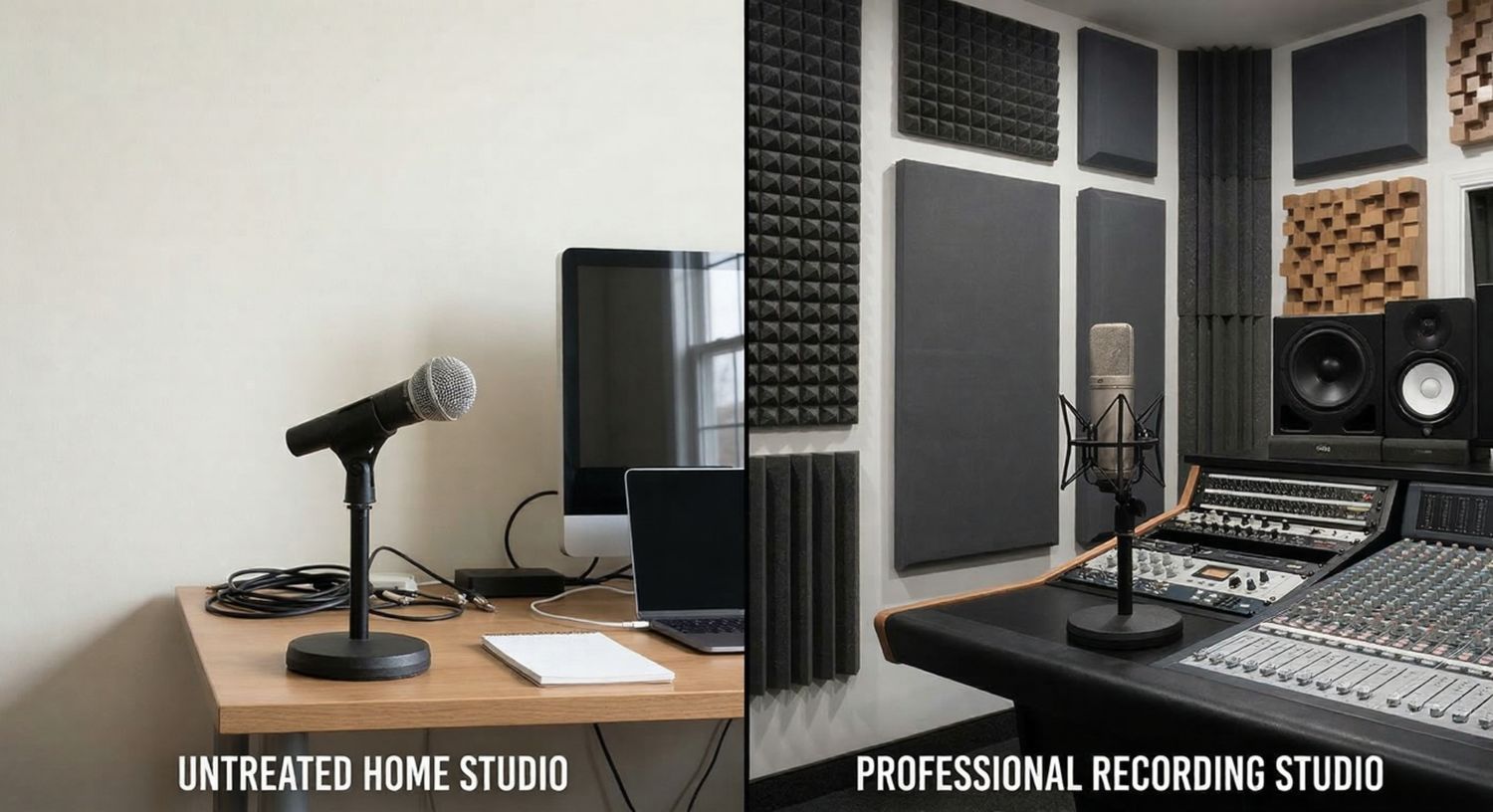
Untreated rooms introduce reflections, resonance, and ambient noise. These conditions amplify room coloration and reduce recording clarity.
Microphone considerations include:
Microphone choice compensates for acoustic limitations in non-treated spaces.
Treated studios minimize reflections and standing waves. These environments allow microphones to capture accurate frequency response and dynamic detail.
Key advantages include:
In treated spaces, microphone selection focuses on tonal accuracy rather than noise rejection.
Live venues introduce high sound pressure levels and competing sound sources. Microphones must isolate target signals while resisting feedback.
Important attributes include:
Microphones in live environments prioritize reliability and isolation over fine detail capture.
Outdoor recording introduces wind, movement, and unpredictable ambient noise. Microphones must maintain signal clarity under variable conditions.
Key considerations include:
Microphone performance outdoors depends on both design and accessory integration.
Microphones are categorized by transduction method, which defines how sound energy becomes an electrical signal. The three primary types are dynamic microphones, condenser microphones, and ribbon microphones. Each type has distinct mechanical structures, sensitivity levels, and acoustic behavior.
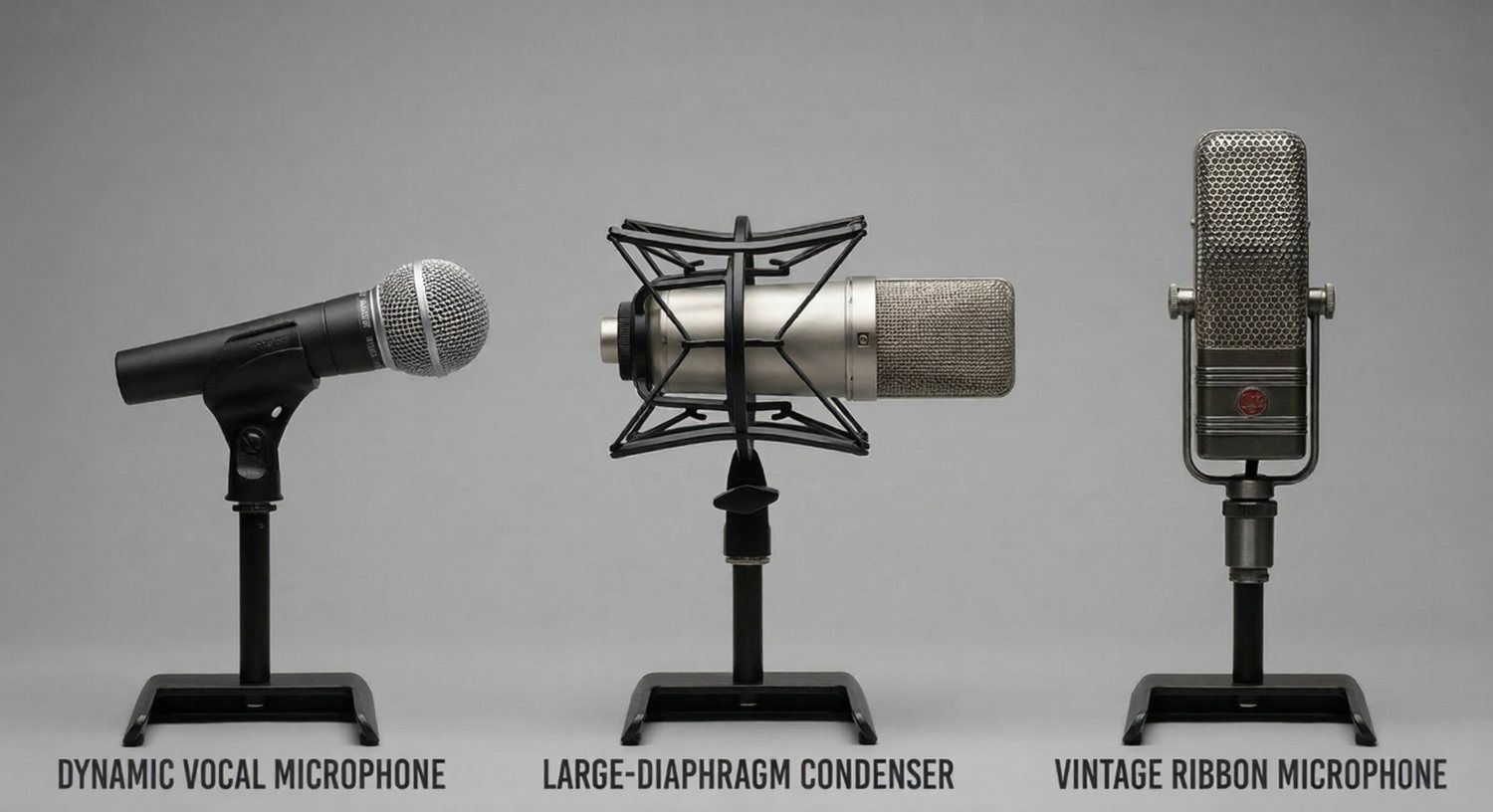
Dynamic microphones convert sound into electrical signals using electromagnetic induction. This design emphasizes durability and controlled sensitivity.
A dynamic microphone contains a diaphragm attached to a voice coil. The voice coil is suspended within a magnetic field. When sound waves move the diaphragm, the coil moves through the magnetic field and generates an electrical current.
This design does not require external power. The output signal strength depends on diaphragm movement and magnetic flux.
Dynamic microphones offer several advantages:
Limitations include:
These characteristics influence microphone selection in loud or uncontrolled environments.
Dynamic microphones are commonly used for:
These use cases benefit from controlled sensitivity and high SPL tolerance.
Condenser microphones convert sound into electrical signals using electrostatic principles. These microphones prioritize detail, accuracy, and transient response.
A condenser microphone uses a diaphragm placed close to a charged backplate. Together, they form a capacitor. Sound waves move the diaphragm, changing capacitance and producing a varying electrical signal.
Condenser microphones require power, typically from phantom power or internal batteries, to maintain the electrical charge.
Large-diaphragm condenser microphones use diaphragms typically larger than 25 mm. These microphones capture rich tonal detail and extended low-frequency response.
Key attributes include:
These microphones emphasize vocal presence and harmonic depth.
Small-diaphragm condenser microphones use diaphragms smaller than 25 mm. These microphones prioritize precision and transient accuracy.
Key attributes include:
These microphones are preferred for detailed acoustic recordings.
Condenser microphones are commonly used for:
These applications benefit from high sensitivity and extended frequency response.
Ribbon microphones use a thin conductive ribbon suspended in a magnetic field. This design produces a distinct tonal response and natural sound reproduction.
A ribbon microphone uses a lightweight metal ribbon that vibrates in response to sound waves. The ribbon acts as both diaphragm and conductor. Ribbon movement within a magnetic field generates an electrical signal.
This design produces a naturally bidirectional pickup pattern in most implementations.
Ribbon microphones provide several advantages:
Limitations include:
These factors affect placement and preamplification requirements.
Ribbon microphones are commonly used for:
These use cases benefit from controlled high-frequency response and natural sound capture.
A polar pattern describes how a microphone responds to sound from different directions. Polar patterns influence isolation, ambient noise capture, and feedback control.
The cardioid polar pattern captures sound primarily from the front while rejecting sound from the rear. This pattern reduces background noise and room reflections.
Cardioid microphones are widely used in studio and live applications due to balanced isolation and tonal consistency.
Supercardioid and hypercardioid patterns provide tighter front pickup and narrower side rejection. These patterns increase isolation but introduce a small rear pickup lobe.
These patterns are used when sound source isolation is critical.
The omnidirectional polar pattern captures sound equally from all directions. This pattern provides natural room ambience and consistent frequency response.
Omnidirectional microphones perform best in acoustically controlled environments.
The figure-8 polar pattern captures sound from the front and rear while rejecting sound from the sides. This pattern emphasizes spatial separation and phase interaction.
Figure-8 microphones are used for stereo recording techniques and controlled studio environments.
Shotgun microphones use an interference tube to create a highly directional pickup pattern. This design isolates distant sound sources.
Shotgun microphones are commonly used in film, broadcast, and field recording.
Multi-pattern microphones allow switching between multiple polar patterns. This flexibility supports varied recording scenarios using a single microphone.
Pattern selection adjusts directional response without changing microphone placement.
The proximity effect is a bass frequency increase that occurs when a directional microphone is placed close to a sound source. This effect results from a pressure gradient design.
The proximity effect increases the low-frequency response as the distance decreases. This behavior affects tonal balance and vocal warmth.
Omnidirectional microphones do not exhibit the proximity effect.
Frequency response describes how a microphone reproduces different frequencies across the audible spectrum. Response shape affects tonal accuracy and perceived clarity.
A flat frequency response reproduces sound evenly without emphasizing specific frequencies. This response supports accurate sound capture and neutral reproduction.
Flat response microphones are used for measurement, orchestral recording, and reference applications.
Presence boost microphones emphasize upper midrange frequencies, typically between 2 kHz and 5 kHz. Tailored frequency curves enhance clarity and intelligibility.
These designs compensate for vocal masking and environmental noise in real-world recording scenarios.
Microphone sensitivity describes how efficiently a microphone converts sound pressure into an electrical signal. Sensitivity is usually measured in millivolts per pascal (mV/Pa) or decibels relative to 1 volt per pascal (dBV/Pa).
High-sensitivity microphones produce stronger output signals from quiet sound sources. Low-sensitivity microphones require louder sound sources or additional gain.
Sensitivity matters because it affects:
Microphone sensitivity must align with the recording purpose and environment to avoid excessive noise or distortion.
Maximum sound pressure level (SPL) indicates the loudest sound a microphone can capture without audible distortion. SPL is measured in decibels (dB SPL).
Microphones with high maximum SPL tolerate loud sources such as drums and guitar amplifiers. Microphones with lower SPL limits distort when exposed to intense sound pressure.
Maximum SPL matters because it defines:
SPL tolerance must match the expected sound intensity of the recording source.
Microphone preamps amplify low-level microphone signals to line level. Preamps directly influence signal clarity, noise level, and dynamic range.
Built-in preamps are integrated into microphones or recording devices. These preamps provide fixed gain structures and simplified signal paths.
Key characteristics include:
Built-in preamps are common in USB and portable recording systems.
External preamps are housed in audio interfaces or standalone units. These preamps provide adjustable gain and improved noise performance.
Key characteristics include:
External preamps support professional recording environments and demanding signal requirements.
Microphones connect to recording systems using different signal transmission methods. Connection type affects signal quality, compatibility, and power delivery.
XLR microphones use balanced analog connections. Balanced signals reduce electromagnetic interference and maintain signal integrity over long cable runs.
XLR microphones require external preamps and, in many cases, phantom power.
USB microphones convert analog signals to digital signals internally. These microphones connect directly to computers without external interfaces.
USB microphones simplify setup but limit upgrade flexibility and signal chain customization.
Wireless microphones transmit audio signals using radio frequency transmission. These systems include a transmitter and receiver pair.
Wireless systems prioritize mobility and convenience while introducing frequency coordination and battery management considerations.
Microphone accessories support stability, isolation, and signal integrity. Proper accessories reduce mechanical noise and environmental interference.
Stands and mounts provide stable microphone positioning. Proper placement improves consistency and reduces handling noise.
Shock mounts isolate microphones from vibrations caused by movement or surface contact. Elastic suspension reduces low-frequency rumble.
Pop filters reduce plosive sounds caused by fast air bursts. Wind screens reduce wind noise and breath interference.
These accessories improve vocal clarity and recording consistency.
High-quality cables maintain signal integrity. Balanced cables reduce interference and signal loss.
Connector quality affects long-term reliability and noise performance.
Matching specifications with applications ensures accurate and efficient microphone performance.
Vocal recording benefits from microphones with controlled proximity effect, tailored frequency response, and moderate sensitivity.
Acoustic instruments require microphones with fast transient response and accurate frequency reproduction.
Guitar amplifier recording requires microphones with high SPL tolerance and controlled midrange response.
Drum recording demands microphones capable of handling extreme SPL while preserving transient clarity.
Podcast recording prioritizes intelligibility, background noise rejection, and consistent output levels.
Common microphone selection mistakes include:
These mistakes reduce recording quality and efficiency.
Microphone evaluation involves assessing specifications, environmental compatibility, and intended use.
Key evaluation steps include:
Evaluation reduces performance mismatches and unnecessary upgrades.
Choosing the right microphone requires aligning the microphone type, polar pattern, sensitivity, SPL tolerance, and connection method with the recording purpose and environment. Accurate selection improves clarity, reduces noise, and supports consistent recording results. A structured understanding of microphone attributes enables informed decisions across studio, broadcast, and field applications.
