
Selecting the right headphones involves more than choosing a stylish design or a popular brand. The ideal pair should match your listening habits, comfort preferences, and technical requirements. Understanding headphone types, sound quality, and connectivity options ensures a purchase that enhances your audio experience. This guide provides a structured approach to choosing headphones based on purpose, design, and technology.
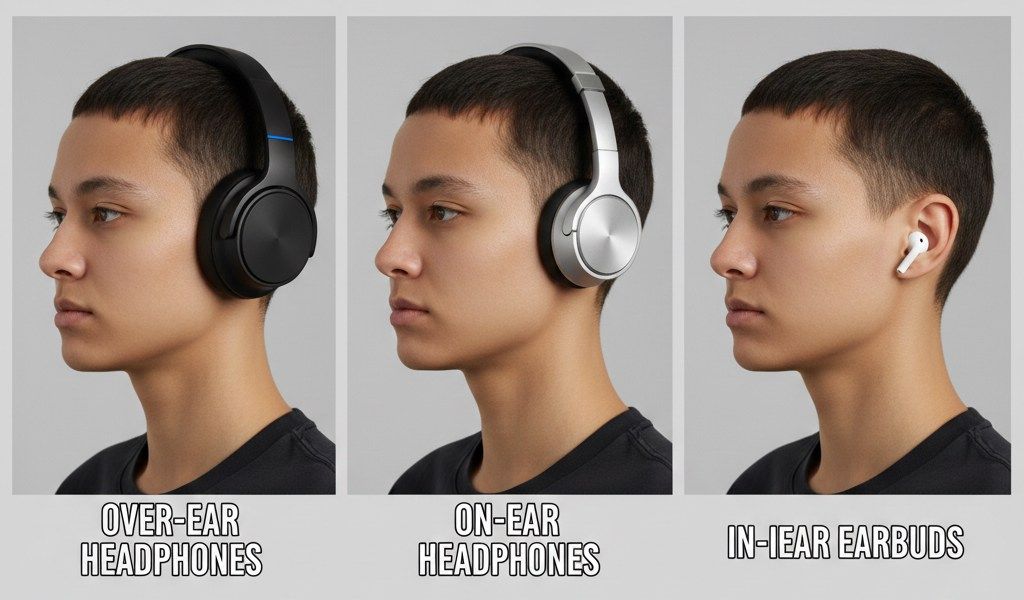
Choosing headphones depends on your specific needs, whether for casual listening, professional work, gaming, or high-fidelity audio. Headphones vary by size, audio performance, and specialized features, making it essential to evaluate how you plan to use them before investing. Factors such as noise isolation, comfort, portability, and sound signature directly impact satisfaction and long-term usability.
Over-ear headphones fully encase the ears, providing superior sound isolation, deep bass, and long-term comfort. On-ear headphones rest on the ears, offering a lighter and more portable option with moderate sound isolation. In-ear headphones, including earbuds, fit directly into the ear canal, excelling in portability and active lifestyles, but may compromise extended listening comfort. Assess your priorities in sound quality, portability, and comfort when selecting the type.
Studio headphones deliver precise, flat sound reproduction ideal for music production, mixing, and mastering. Their design focuses on accuracy over enhancement, allowing professionals to hear every detail. For enthusiasts seeking critical listening, investing in studio headphones ensures that recordings are reproduced faithfully, aiding in professional-quality output.
Gaming headsets combine headphones and microphones, optimized for immersive gameplay. They feature surround sound, low-latency connectivity, and communication-focused microphones. Gamers benefit from directional audio cues for competitive advantage, while casual users may find them less suitable due to bulk and sound tuning focused on gaming rather than music fidelity.
Audiophile-grade headphones prioritize high-fidelity sound, wide frequency response, and superior build quality. Open-back designs often enhance spatial accuracy and natural sound, while planar magnetic drivers offer precise detail reproduction. Audiophiles prioritize clarity, dynamic range, and minimal distortion, often accepting higher cost and reduced portability in exchange for superior listening experience.
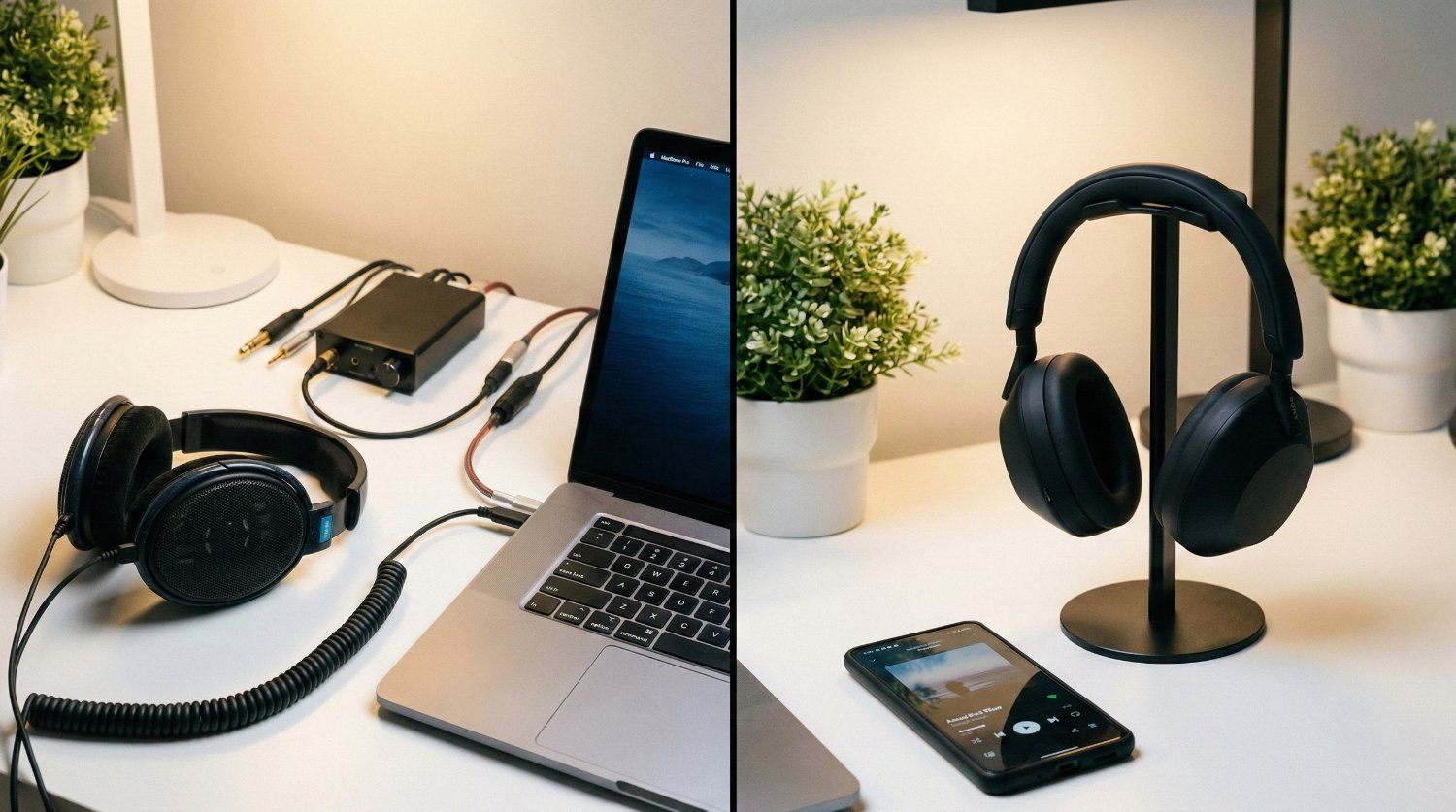
Deciding between wired and wireless headphones requires balancing convenience, battery life, and audio performance. Wired headphones provide consistent audio quality without charging concerns, whereas wireless headphones offer freedom of movement and modern connectivity options. Your choice should reflect usage patterns, including commuting, exercising, professional work, or home listening.
Wired headphones provide uninterrupted sound quality without latency or interference. They are ideal for studio work, gaming, and high-fidelity listening. No battery dependency ensures reliability, and high-end wired models often achieve sound performance surpassing wireless counterparts, especially in bass response and clarity.
Wireless headphones eliminate cords for greater mobility, making them ideal for commuting, workouts, and multitasking. Advanced Bluetooth technology ensures stable connections and compatibility with multiple devices. Modern wireless models often include noise cancellation and touch controls, combining convenience with a high-quality listening experience.
True wireless earbuds offer complete freedom from cables, fitting entirely in the ear. They are lightweight, portable, and designed for on-the-go lifestyles. Features like automatic pairing, touch controls, and integrated voice assistants enhance convenience, but sound quality may be slightly lower than full-sized models, making them best suited for casual listening, travel, and exercise.
Choosing headphones that fit well is crucial for long-term comfort and optimal sound quality. Proper fit ensures effective sound isolation, accurate audio reproduction, and reduced fatigue, especially during extended listening sessions. Factors such as ear shape, head size, and wearing style influence the choice between over-ear, on-ear, and in-ear options.
Over-ear headphones fully enclose the ears, providing superior comfort with padded ear cups and headbands. They offer excellent sound isolation by physically blocking external noise. The large ear cups distribute pressure evenly, reducing strain on the ears. For home listening or studio work, over-ear headphones deliver immersive audio without external interference.
On-ear headphones rest directly on the ears, balancing portability and sound quality. They are lighter and easier to carry, making them suitable for commuting. However, they provide moderate noise isolation and can cause discomfort during long sessions due to concentrated pressure on the ears. Comfort depends on padding quality and clamping force.
In-ear monitors (IEMs) and earbuds fit directly into the ear canal, offering high portability and active lifestyle suitability. They provide passive noise isolation and a secure fit for movement. Neck-sitting headphones rest around the neck when not in use, combining accessibility and comfort, ideal for fitness enthusiasts who want quick audio access without bulky storage.
Open-ear headphones leave ears uncovered, allowing ambient sounds while listening. They are suitable for outdoor activities where awareness of surroundings is necessary. Bone-conduction headphones transmit sound through cheekbones, bypassing the eardrum, making them excellent for hearing-sensitive users and athletes who need situational awareness without blocking external noise.
Modern headphones come with features designed to enhance usability, safety, and audio performance. Understanding these features ensures you select a pair that matches your lifestyle, environment, and listening preferences.
Noise cancellation reduces unwanted external sounds, allowing focus on music or calls. Active noise cancellation (ANC) uses microphones and sound waves to counteract ambient noise, ideal for travel or busy environments. Passive noise isolation, achieved through ear cup design or snug in-ear fit, blocks external sounds without electronics, improving clarity and listening comfort.
Water-resistant headphones protect against sweat and rain, extending durability for workouts or outdoor use. Fully waterproof models can be submerged and are ideal for swimming or wet conditions. Look for IPX ratings, which indicate resistance levels, ensuring reliable performance in your intended environment.
Integrated voice assistants allow hands-free operation, enabling music control, calls, navigation, and smart home interaction without touching your device. This feature enhances convenience, particularly for commuters, fitness enthusiasts, and multitaskers, making headphones more than just an audio accessory.
Bone-conduction headphones transmit vibrations through the cheekbones directly to the inner ear, bypassing the eardrum. This allows users to perceive audio while maintaining awareness of surrounding sounds. They are suitable for cyclists, runners, and individuals with specific hearing requirements.
Built-in microphones facilitate calls and voice commands, while inline or touch controls allow track changes, volume adjustment, and playback management. Volume-limiting features protect hearing, particularly for children or prolonged listening, by capping maximum output levels without compromising audio quality.
Certain headphones provide amplification and customizable sound profiles for users with mild hearing loss. Features may include adjustable equalizers, hearing-enhancement modes, or compatibility with assistive listening devices, ensuring audio clarity and safety without exceeding safe volume limits.
Selecting headphones according to lifestyle and specific activities ensures better comfort, durability, and audio satisfaction. Factors such as portability, noise isolation, battery life, and durability should guide your choice.

Sports headphones offer a secure fit, sweat resistance, and a lightweight design. In-ear or neckband models are common for running, cycling, and gym workouts. Features like water resistance, quick charging, and wireless connectivity enhance convenience and prevent interruptions during activity.
Office-friendly headphones prioritize clarity, microphone quality, and noise reduction. Over-ear models with ANC improve focus in noisy environments, while lightweight wireless options allow multitasking. Features like mute buttons, USB or Bluetooth connectivity, and integration with conferencing software enhance professional usability.
Travel headphones focus on comfort, long battery life, and advanced noise cancellation. Over-ear wireless models with ANC block engine and ambient noise, while compact in-ear options offer portability for airports and public transport. Features like fast charging, foldable design, and flight-friendly adapters improve convenience during long journeys.
Home entertainment headphones emphasize immersive sound quality, comfort, and connectivity. Over-ear open-back or closed-back designs reproduce spatial audio for movies, music, and gaming. Features like wireless connectivity, low latency, surround sound, and high-fidelity drivers enhance the home listening experience.
Gaming headsets combine immersive audio with communication tools. Look for surround sound, directional audio, low-latency wireless or wired connections, comfortable padding for long sessions, and high-quality microphones. Adjustable RGB lighting and software customization may enhance the gaming environment, but are secondary to audio performance and comfort.
Children’s headphones include volume-limiting features, durable construction, and a lightweight design. Over-ear models protect hearing by capping output levels, while soft padding ensures comfort. Fun designs, bright colors, and wireless options encourage use without compromising safety or audio quality.
Understanding headphone specifications helps you make informed decisions, ensuring compatibility with your devices, desired sound quality, and overall listening experience. Specifications like battery life, audio resolution, impedance, and frequency response provide measurable indicators of performance and usability.
Wireless headphones typically offer 8–40 hours of playback on a single charge, depending on model, active features like noise cancellation, and volume levels. Fast-charging capabilities can provide several hours of use with only a short charging session. Users should balance battery life with weight, comfort, and intended use, particularly for travel or long listening sessions.
High-resolution (Hi-Res) audio delivers more detailed and accurate sound reproduction than standard formats, capturing frequencies beyond the standard 44.1 kHz/16-bit CD quality. This results in clearer instruments, richer tones, and a more immersive listening experience. Hi-Res headphones and compatible devices ensure the audio source retains its intended fidelity.
Stereo headphones separate audio into left and right channels, creating spatial depth and realistic soundstage perception. Mono headphones deliver the same audio signal to both ears. For immersive music, gaming, and cinematic experiences, stereo is preferred. Mono may suffice for phone calls, speech-based applications, or accessibility needs.
Frequency response indicates the range of audible sound a headphone can reproduce, typically 20 Hz–20 kHz. Lower frequencies affect bass depth, while higher frequencies influence treble clarity. Headphones with a wider frequency range can reveal subtle details, but real-world perception also depends on driver quality and tuning.
Sensitivity measures how efficiently headphones convert electrical signals into sound, expressed in decibels per milliwatt (dB/mW). Higher sensitivity produces louder output at lower power. Proper sensitivity ensures adequate volume without distortion or overdriving the headphones, protecting hearing and improving audio clarity.
Impedance, measured in ohms (Ω), indicates resistance to electrical signals. Low-impedance headphones (16–32 Ω) are ideal for smartphones and portable devices, drawing less power. High-impedance models (100+ Ω) suit dedicated amplifiers and studio equipment, offering precise control, reduced distortion, and superior sound fidelity.
Testing headphones before purchase ensures comfort, fit, and sound preference alignment. Effective evaluation considers audio clarity, connectivity, form factor, and responsiveness to your intended use.
Focus on balance, clarity, bass, mids, and treble reproduction. Evaluate how instruments and vocals are separated and whether the soundstage feels natural. Test at multiple volume levels, including realistic listening scenarios, to ensure consistent quality and minimal distortion across different tracks or content types.
Bluetooth codecs like SBC, AAC, aptX, and LDAC influence audio fidelity, latency, and device compatibility. Higher-quality codecs transmit more data with less compression, improving clarity, detail, and synchronization with video. Compatibility between the source device and headphones is crucial for optimal performance, particularly in gaming and Hi-Res audio scenarios.
Closed-back headphones isolate sound by enclosing the ears, reducing external noise, and preventing audio leakage. Open-back designs allow air and sound to pass through, offering natural, spacious audio ideal for home listening or mixing. Choice depends on environment, privacy needs, and desired listening experience.
Software-driven headphones may include EQ adjustments, ANC customization, or spatial audio features. Firmware updates can enhance performance, add new features, and fix bugs, extending device lifespan. Users should choose brands with reliable support and regular updates for maximum long-term value.
Selecting headphones requires careful evaluation of comfort, performance, and personal preferences. A structured approach ensures compatibility with your devices, environment, and intended listening scenarios.
