
Choosing an aviation headset requires evaluating communication clarity, noise reduction performance, comfort, and aircraft compatibility. Aviation headsets are not interchangeable audio accessories; they are flight-critical communication tools designed to operate in high-noise cockpit environments. Differences in noise reduction technology, plug types, microphone systems, and power requirements directly affect pilot workload and operational safety.
This guide explains how aviation headsets work, which technical features matter most, and how pilot category, aircraft type, and flight hours influence headset selection. Each section focuses on a specific attribute of aviation headsets to support informed decision-making for training, private, and professional flight operations.
An aviation headset is a pilot communication device that combines headphones and a noise-canceling microphone to enable clear radio transmission while reducing cockpit noise.
An aviation headset connects to an aircraft intercom and radio system, allowing pilots to receive air traffic control instructions and communicate without interference from engine, propeller, or airflow noise.
Aviation headsets perform three core functions:
Aviation headsets are essential because accurate radio communication directly affects flight safety.
Clear reception of air traffic control instructions, traffic advisories, and weather updates supports situational awareness and reduces the risk of operational errors.
High cockpit noise levels can:
Noise-attenuating aviation headsets reduce these risks by stabilizing communication quality across all phases of flight.
An aviation headset is required for any pilot operating an aircraft equipped with a radio and intercom system. Different pilot categories face distinct operational demands, which influence headset requirements for noise reduction, durability, and comfort.
Student pilots require aviation headsets to improve radio comprehension during flight training.
Clear audio reception supports learning standard phraseology, call signs, and ATC instructions while reducing distraction in high-workload environments.
Private pilots benefit from aviation headsets that balance comfort and noise reduction for longer cross-country flights. Consistent communication clarity helps maintain focus during navigation, airspace transitions, and approach procedures.
Commercial pilots depend on aviation headsets designed for extended duty periods and high-frequency radio use. Reliable noise reduction and microphone performance support professional communication standards and fatigue management.
Flight instructors require aviation headsets that deliver continuous communication clarity and long-term comfort. Frequent instructional use places higher demands on durability, microphone reliability, and ergonomic fit.
Aviation headsets reduce cockpit noise through a combination of physical sound attenuation and electronic noise-canceling technologies.
The effectiveness of noise reduction depends on headset design, seal integrity, and the noise reduction method employed.
Passive Noise Reduction (PNR) reduces sound by physically blocking external noise using ear cups, ear seals, and clamping force.
PNR is most effective at attenuating mid- and high-frequency noise produced by airflow and cockpit vibration.
Active Noise Reduction (ANR) uses electronic circuitry to cancel low-frequency noise by producing inverse sound waves.
ANR is particularly effective against continuous engine and propeller noise common in piston-powered aircraft.
Digital Noise Reduction (DNR) filters unwanted noise from incoming audio signals without altering speech frequencies.
DNR primarily enhances radio and intercom clarity rather than reducing ambient cockpit noise.
Effective noise reduction improves speech intelligibility by isolating voice frequencies from background noise.
Lower noise exposure reduces cognitive strain and supports sustained concentration during long flight segments.
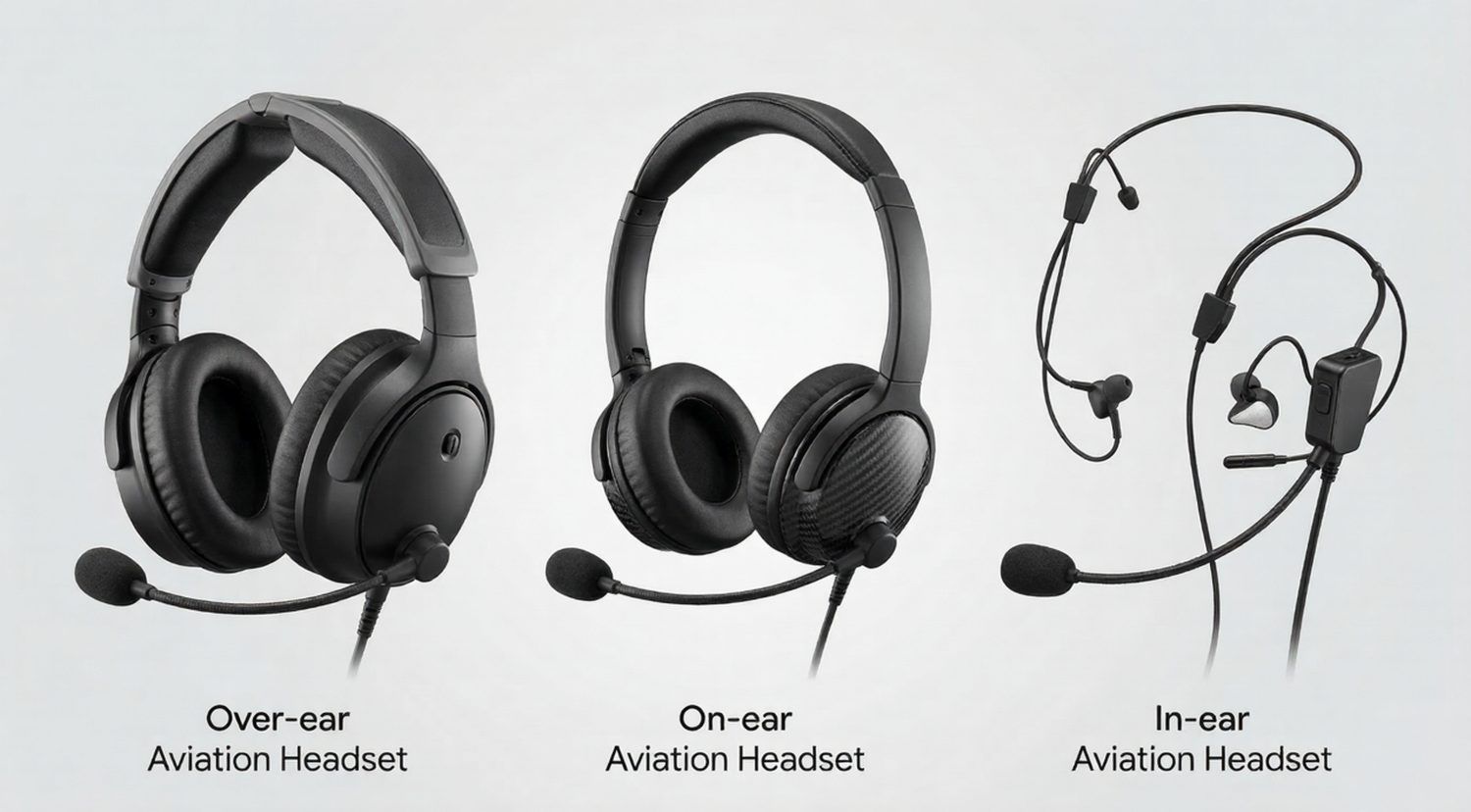
Aviation headset style determines how noise isolation, comfort, and weight are distributed across the head and ears.
The correct style depends on cockpit noise levels, flight duration, and personal comfort preferences.
Over-ear aviation headsets surround the entire ear, providing strong passive noise isolation and stable fit.
This style is widely used in training, general aviation, and commercial cockpits.
On-ear aviation headsets rest directly on the ear, reducing overall headset weight.
This design offers moderate noise reduction and is preferred by pilots prioritizing lighter equipment.
In-ear aviation headsets use ear canal inserts to block noise at the source.
This style provides high noise isolation with minimal weight and reduced head pressure.
Comfort is a critical performance factor because aviation headsets are worn continuously during flight operations.
Poor fit or excessive pressure can cause distraction and fatigue.
Balanced headband pressure prevents pressure points and uneven load on the head.
Proper weight distribution reduces neck strain during extended flights.
High-quality ear seals improve acoustic isolation while limiting heat buildup.
Materials such as gel-filled or ventilated foam seals enhance long-duration comfort.
Appropriate clamping force maintains a consistent acoustic seal without excessive pressure.
Adjustable headbands and pivoting ear cups allow precise fit customization.
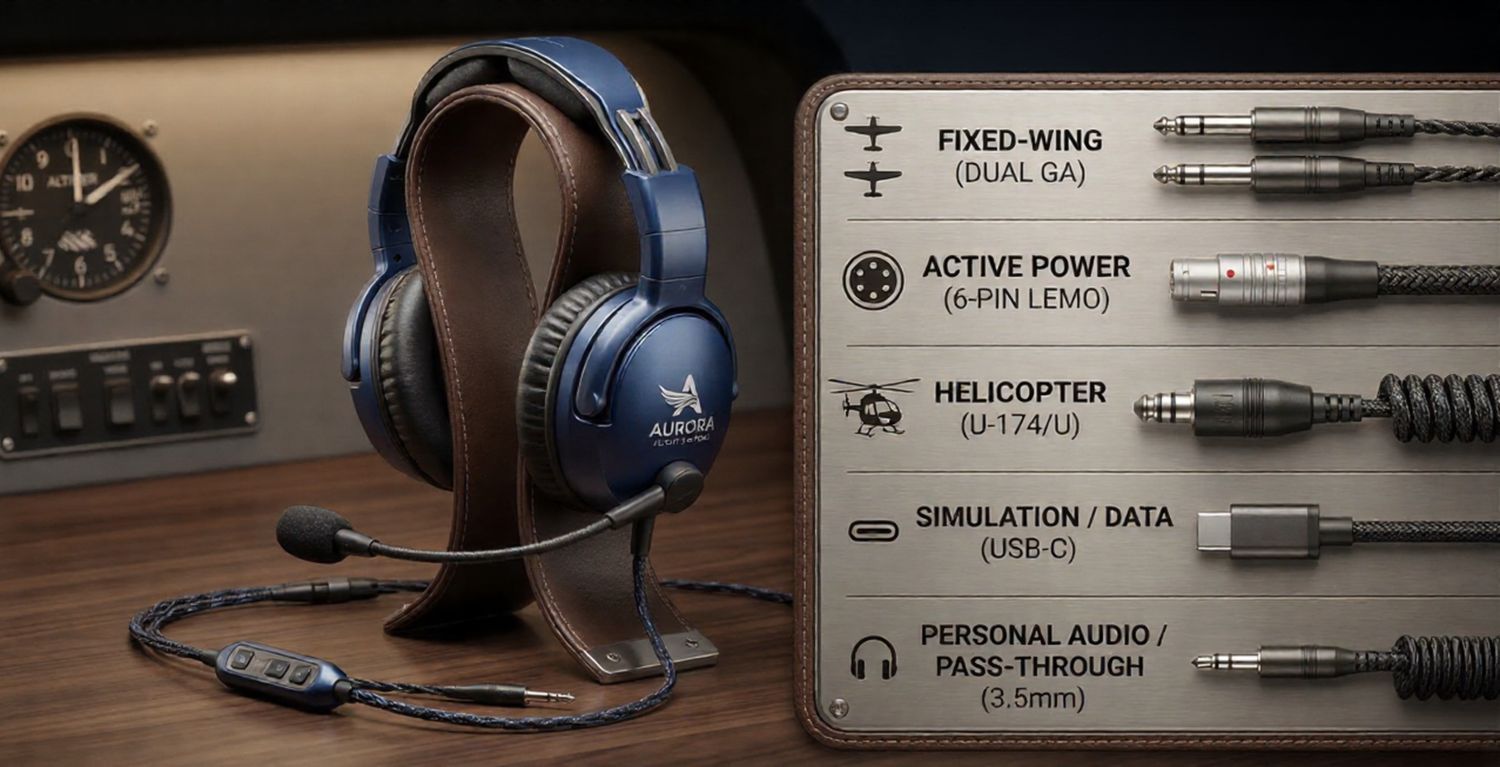
The aviation headset plug type determines whether the headset can connect directly to an aircraft’s audio system.
Plug compatibility depends on aircraft category, avionics configuration, and power requirements.
Dual GA plugs consist of two separate connectors: one for audio output and one for microphone input.
This plug type is standard in most general aviation aircraft and flight training airplanes.
Dual GA plugs:
The U-174 plug is a single, large connector used primarily in helicopter cockpits.
This plug type is designed for high-vibration environments and simplified connections.
U-174 plugs:
LEMO plugs provide both audio connection and electrical power through a single panel-mounted connector.
This plug type eliminates the need for headset batteries.
LEMO plugs:
XLR connectors are used in some turbine aircraft and military-style installations.
Adapters allow certain aviation headsets to connect across different plug standards, but power and audio compatibility must be verified.
Stereo and mono aviation headsets differ in how audio signals are delivered to the ears.
The correct choice depends on the aircraft audio panel configuration and operational requirements.
Stereo audio delivers separate left and right channel signals to each ear.
This configuration improves spatial awareness and audio clarity when supported by the aircraft system.
Stereo is commonly required for:
Mono headsets transmit identical audio signals to both ears.
Aircraft equipped with mono intercoms or legacy avionics require mono-compatible headsets or stereo headsets with mono fallback capability.
Microphone type affects voice clarity, noise rejection, and transmission reliability.
Aviation microphones are engineered to operate in high-noise environments.
Electret microphones use electrically charged materials to capture sound with high sensitivity.
These microphones are widely used in modern aviation headsets.
Electret microphones:
Dynamic microphones generate signals through electromagnetic movement.
This microphone type does not require external power.
Dynamic microphones:
Noise-canceling microphones reject background noise by focusing on sound waves produced by the pilot’s voice.
This technology improves transmission clarity during high engine power and airflow conditions.
Power requirements depend on whether the headset uses active noise reduction or electronic microphone systems.
Battery-powered ANR headsets rely on internal batteries to operate noise-canceling circuits.
Battery consumption varies based on usage duration and system efficiency.
Panel-powered headsets receive electrical power directly from the aircraft via LEMO or XLR connectors.
This configuration removes dependency on batteries and ensures consistent ANR performance.
Most ANR headsets continue to function as passive headsets if power is lost.
Understanding fallback behavior is critical for uninterrupted communication during electrical failures.
Bluetooth capability adds wireless connectivity for auxiliary audio devices.
Its usefulness depends on the pilot workflow and operational environment.
Bluetooth allows connection to mobile devices for phone calls, music playback, and navigation alerts.
Audio priority systems manage interruptions to maintain radio communication clarity.
Bluetooth usage must not interfere with required communication channels.
Pilots must ensure compliance with operational procedures and cockpit workload management practices.
TSO approval indicates compliance with specific aviation performance standards.
TSO-C139 defines performance requirements for aviation headsets used in certain certified operations.
This approval confirms that the headset meets environmental, audio, and durability standards.
TSO-approved headsets are typically required for commercial and regulated operations.
Non-TSO headsets are commonly used in training and private aviation where certification is not mandated.
Flight frequency and aircraft category significantly influence headset requirements.
Training aircraft generate high noise levels and frequent communication cycles.
Durability and effective noise reduction are essential for repetitive use.
Turbine aircraft produce continuous low-frequency noise.
ANR performance and long-term comfort are critical for extended flight operations.
Helicopter cockpits produce high vibration and broadband noise.
Headsets designed for rotary-wing aircraft prioritize secure fit and vibration resistance.
Technical specifications define performance limits and compatibility.
NRR measures the effectiveness of passive noise attenuation.
Higher NRR values indicate greater sound reduction capability.
Frequency response defines the range of sound frequencies the headset can reproduce.
Aviation headsets prioritize speech-frequency clarity over full-range audio reproduction.
Impedance affects compatibility with aircraft audio systems.
Matching headset impedance with avionics output ensures optimal audio volume and clarity.
The lifespan of an aviation headset depends on build quality, usage frequency, and environmental exposure.
Most aviation headsets are designed to withstand repeated use in high-noise, high-vibration cockpit environments.
Cables and connectors experience the highest mechanical stress during normal use.
Frequent plugging, unplugging, and cockpit movement can cause wear at strain relief points and connector housings.
Durable aviation headsets use:
Warranty coverage reflects expected product longevity and the manufacturer's support commitment.
Longer warranties typically indicate higher component durability and availability of replacement parts.
Support lifespan includes:
Budget determines the balance between noise reduction performance, comfort features, and long-term durability.
Understanding feature trade-offs helps align cost with operational needs.
Entry-level aviation headsets prioritize basic communication functionality and passive noise reduction.
These headsets are commonly used in flight training and short-duration flights.
Entry-level headsets typically offer:
Mid-range aviation headsets balance advanced noise reduction with improved comfort.
These headsets are suitable for frequent private pilots and instructors.
Mid-range models usually include:
Premium aviation headsets are designed for extended flight operations and professional use.
These headsets focus on maximum noise attenuation, long-term comfort, and durability.
Premium headsets often feature:
Different pilot categories experience unique operational demands that influence headset requirements.
Student pilots benefit from aviation headsets that emphasize durability and clear communication.
Simple controls and effective noise reduction support learning and reduce distraction.
Private pilots require aviation headsets that balance comfort with audio clarity for longer flights.
Moderate weight and reliable noise reduction improve cross-country flight endurance.
Commercial pilots depend on aviation headsets engineered for extended duty periods and high communication density.
Consistent ANR performance and microphone reliability are critical in professional operations.
Flight instructors require aviation headsets capable of continuous use across multiple flight sessions.
Comfort, durability, and clear intercom communication support effective instruction.
Proper setup ensures optimal audio clarity and microphone performance.
Incorrect positioning can reduce transmission intelligibility even with high-quality equipment.
Correct setup steps include:
Consistent adjustment improves speech clarity and reduces background noise intrusion.
Aviation headset selection errors often result from compatibility mismatches or underestimated usage demands.
Common mistakes include:
Avoiding these mistakes improves satisfaction and long-term usability.
Choosing the right aviation headset requires evaluating noise reduction methods, comfort, power requirements, plug compatibility, and intended flight operations.
Matching headset features to aircraft type, flight frequency, and pilot category ensures reliable communication and reduced fatigue.
Aviation headsets that align with operational demands improve situational awareness, communication clarity, and long-term pilot performance.
